What it does
The app opens to a national map of NEON sites. Tap one to dive into its plants, or step back and compare the whole network. Each site loads instantly from a per-site data bundle that ships with the app (no network round-trip). From there it shows what grows there and how much ground it covers, counts how many species really use the site (beyond what one survey catches), tracks native versus introduced cover, plots every plot by its richness and invasion, and profiles any single plot on a downloadable card.
It is built for two audiences: anyone curious about how NEON surveys plants, and new field technicians getting to know the species at their site.
Highlights
Select-a-site map · A national map of all 46 bundled terrestrial sites. The demo opens Santa Rita (SRER), a Sonoran desert grassland with a textbook Lehmann lovegrass invasion.
Overview: the story of a site · Cover composition (native versus introduced), an auto-written plain-English summary, and the ground itself: soil, litter, and rock.
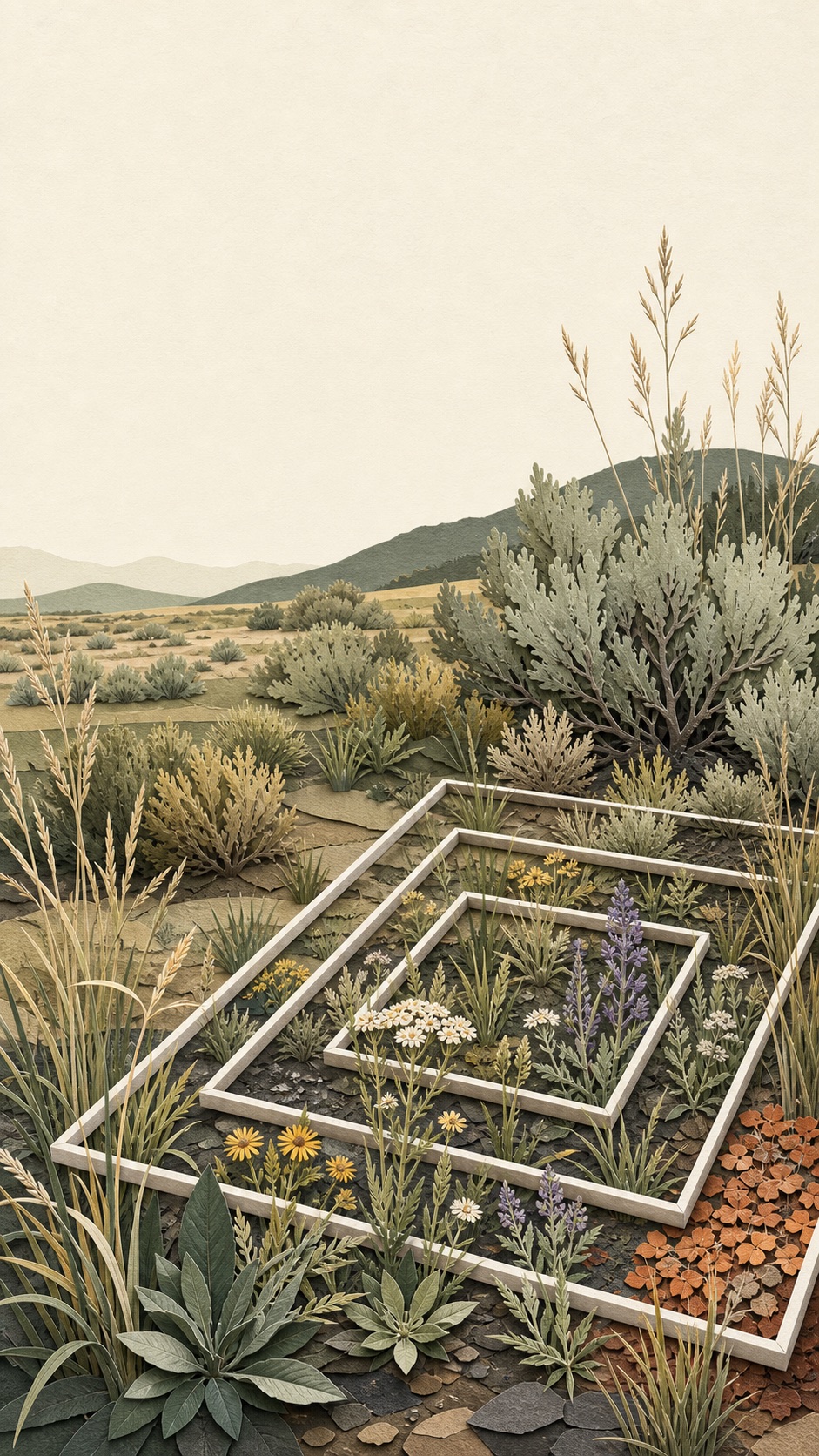
Diversity · A nested species-area curve (1 to 10 to 100 to 400 square meters), the Hill diversity profile, and a Chao2 estimate of how many species the survey likely missed.
Native vs Invasive · Introduced-cover share over time, an invasive watchlist, and an Invasion-Pressure index for introduced species already showing up at the smallest 1 square meter scale.
Diversity Lab · Every plot as a dot, richness against percent introduced cover, with tap-to-pin plot cards, named quadrants, and export-with-pins.
Plot Profile cards · A downloadable card (PNG and CSV) for any plot: richness, the native and introduced split, a species-area sparkline, and its top plants by cover.
Map · Plot markers sized by richness and coloured by richness or percent introduced, so you can see how a site varies across its ground.
1→400 m²
plot sizes surveyed
How we keep it honest
The app uses real NEON data, saved ahead of time, and it is upfront about
what the numbers can and cannot say. Cover is an estimate, not an exact measurement. In the
field a person eyes how much ground each plant covers, and plants overlap, so we treat cover as a
rough sense of what is common, never as an exact area. Counting variety. A short visit
always misses a few rare plants, so alongside the plain species count we show an estimate of how
many species are likely really there, with a range around it instead of one hard number.
Trends over time. When we check whether plant life tracks weather, we test it against what
random chance would produce, so a site with only a few years of data is told its record is too
short to call a trend rather than handed a false one. And whenever we split plants into native
versus introduced, we also show the share we could not classify. These are educational tools,
not affiliated with NEON, Battelle, or the NSF.